
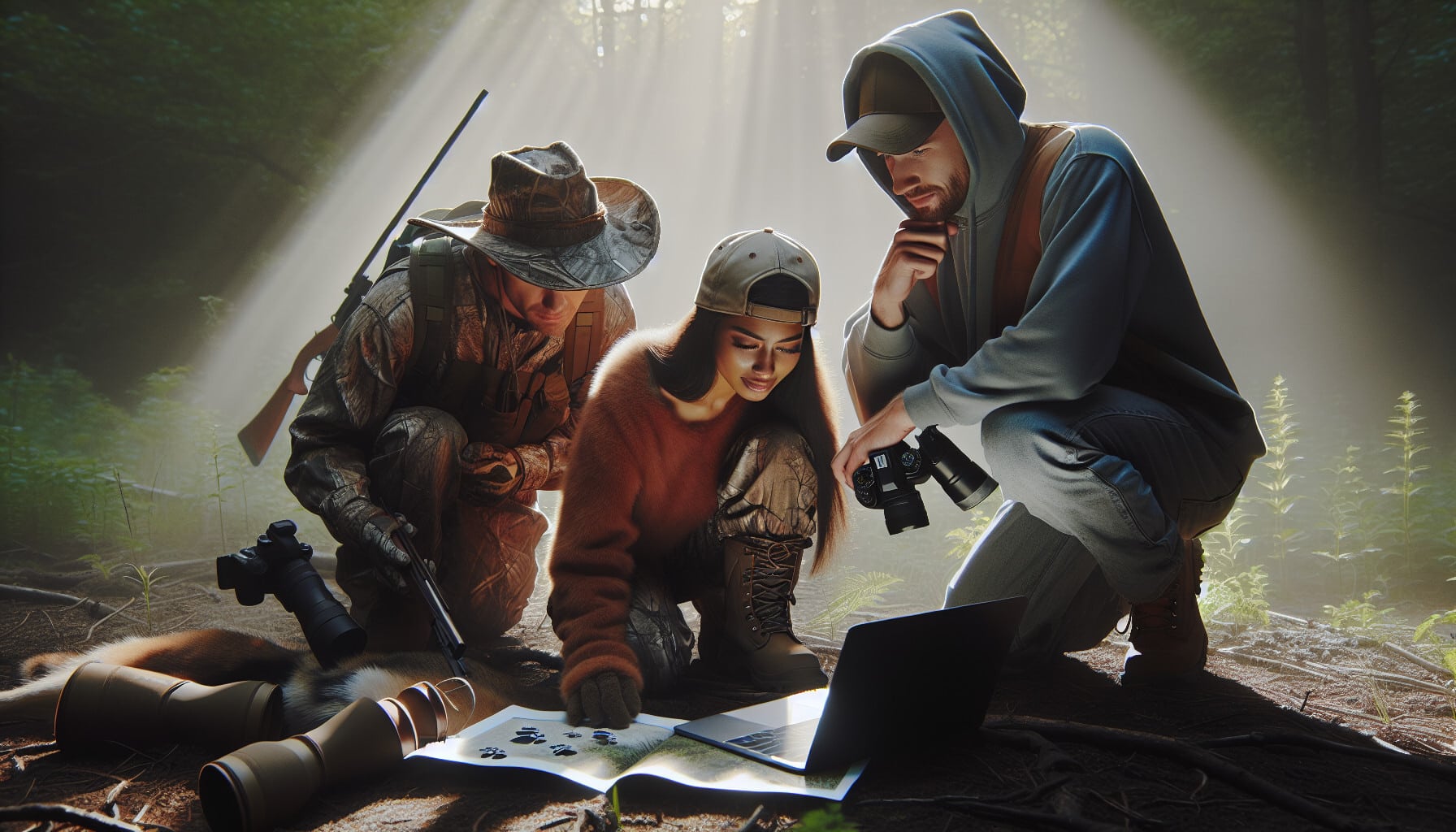


In the realm of predator hunting, particularly in Alaska, newcomers often seek guidance to navigate the complexities of the sport. Over time, common questions arise among these budding hunters. Drawing from extensive experience and insights gained through various hunting scenarios, the following addresses the top five inquiries frequently posed by new predator hunters.
1. What Firearm Should Be Used for Predator Hunting?
Answer: A variety of firearms are suitable for predator hunting, with popular rifle calibers including .223, .22-250, .243, 6.5 Creedmoor, and .308. The choice of caliber often depends on the hunting conditions and terrain.
For shots within 100-200 yards, smaller calibers like the .223 are ideal. Conversely, for potential shots up to 500 yards, larger calibers such as the 6.5 Creedmoor are recommended. Some hunters also consider pelt damage when selecting their caliber.
Shotguns, particularly 12-gauge models loaded with .00 Buck, can be effective for harvesting coyotes while minimizing pelt damage. Carrying both a rifle and a shotgun is advisable, as shotguns are most effective at distances of 50 yards or less. This dual approach allows hunters to engage multiple coyotes effectively.
2. When is the Optimal Time to Hunt – Day or Night?
Answer: While experienced predator hunters might argue that any time can be productive, early mornings and late evenings are often the best times to hunt. During daylight hours, peak activity typically occurs shortly after sunrise and in the final two hours before dusk.
For night hunting, the most effective time is immediately after complete darkness, as this allows hunters to utilize artificial light sources, such as the Pursuit Predator 300 Lumens Night Hunting Light, to spot approaching coyotes.
Tip: Always verify state regulations regarding the use of artificial lights for hunting.
3. Where Should You Position Yourself When Calling Coyotes?
Answer: The primary factor in selecting a calling position is wind direction. A crosswind is preferred, as it allows for shot opportunities in the downwind direction, where coyotes typically approach. Choosing a spot against a tree, rock, or hill can help avoid being silhouetted against the skyline.
If natural cover is unavailable, utilizing shadows can help break up the hunter’s outline. The Tenzing TZPP15 Predator Pack is an excellent option for sitting comfortably in open areas while keeping essential gear accessible.
Tip: Wearing camouflage, including a facemask and gloves like the NOMAD Harvester Gloves, is crucial for blending into the surroundings.
4. How Long Should You Remain on Stand?
Answer: The duration spent calling can vary based on several factors, including the overall time allocated for the hunt. In predator calling contests, hunters typically spend 15 to 30 minutes at each stand to maximize coverage. In standard hunting scenarios, 30 to 45 minutes is common.
Using a device like the FOXPRO Shockwave electronic game caller can assist in timing. For instance, coyote vocalizations can be introduced at the 30-minute mark, and if no activity occurs by the 45-minute mark, it’s time to move on.
Tip: When targeting bobcats, extend the stand duration to 45 minutes to an hour, as they tend to approach more cautiously.
5. Should Coyote Howls Be Used Before Calling?
Answer: Howling prior to a calling sequence is a widely adopted strategy among predator hunters. This tactic plays on a coyote’s territorial instincts. By emitting 4 to 5 soft howls before distress sounds, it simulates the presence of another coyote in the area, prompting a quicker response when distress calls are introduced.
Generally, the caller should initiate with 3 to 4 howls, pause for 30 to 40 seconds, and then repeat. In winter, incorporating challenge howls or barks can enhance effectiveness.
Tip: Consider using the top-rated Primos Hot Dog Predator Coyote Howler Call for optimal results.
Engaging in coyote hunting can be both thrilling and rewarding. Continuous learning from experiences and insights shared by seasoned hunters will enhance success rates. Each outing presents a new opportunity for growth in the art of predator hunting.