
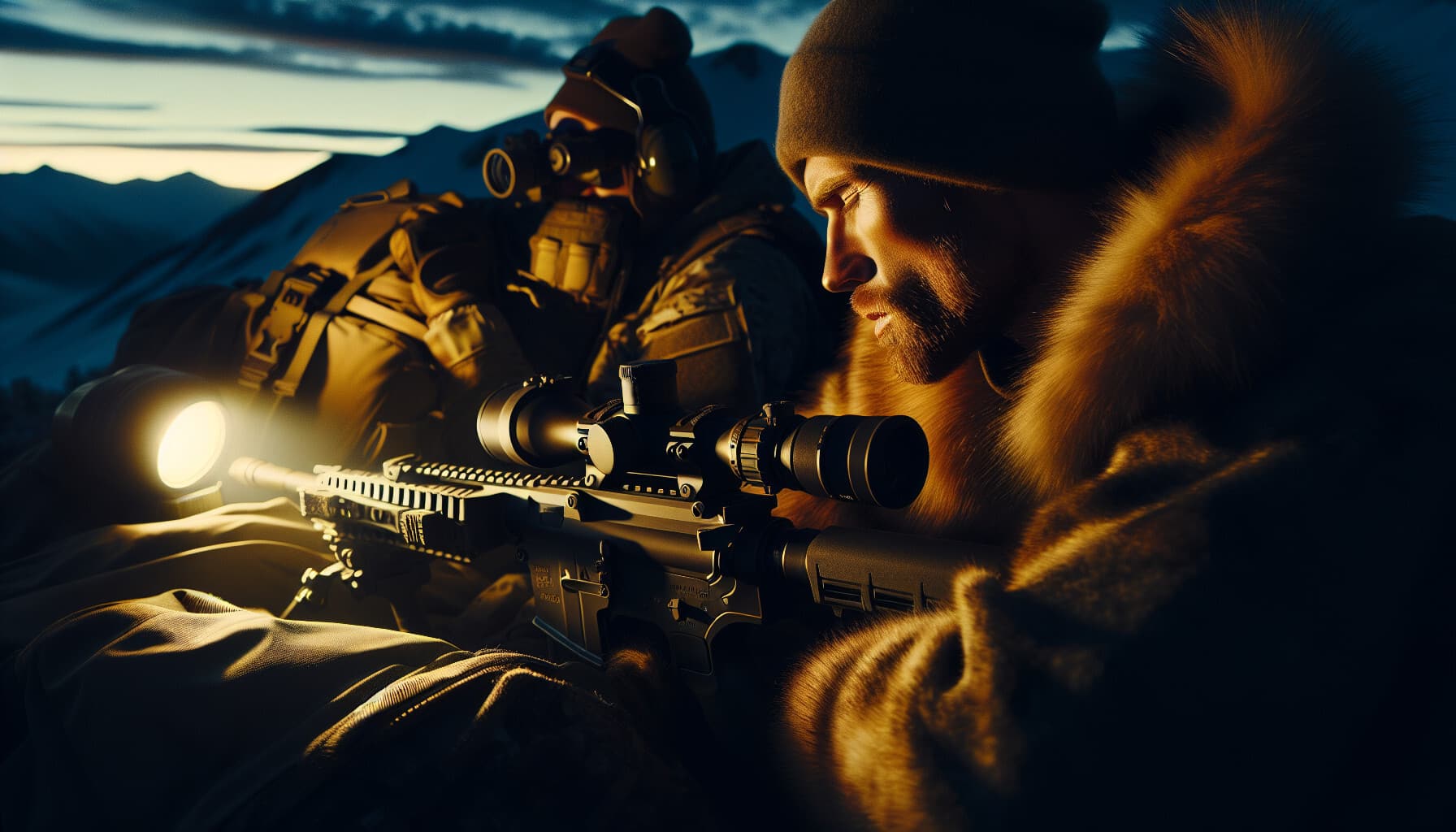
Understand Which Night Vision Unit Best Suits Your Needs
Night vision technology has evolved significantly since its inception during World War II, where early devices were bulky and required mounting on vehicles for use. Today, night vision riflescopes, monoculars, and goggles have transformed outdoor experiences, making nighttime activities like hunting more accessible and effective.
As the prices of night vision equipment have become more affordable, outdoor enthusiasts can now enjoy activities such as observing wildlife undisturbed, navigating dark woods, or hunting nocturnal animals. Understanding night vision technology is essential for selecting the right equipment to enhance these experiences.
Two primary systems dominate the night vision market: infrared and image intensifier technologies.
Infrared Night Vision (FLIR)
FLIR Thermosight Thermal Rifle Scope
Infrared or thermal imaging technology detects heat signatures emitted by living beings and objects. These devices enhance visibility against cooler backgrounds, making them effective for spotting concealed game both day and night. Infrared technology excels in low-light conditions, such as overcast nights, where minimal ambient light is available.
Image-Intensifier Night Vision (I2)
Traditional image-intensifier night vision collects minute particles of light, converting them into electrons that are amplified and projected onto a phosphorescent screen. This process creates a visible image, typically in green, which is easier for the human eye to perceive over extended periods. The technology has evolved through several generations, each offering improved image quality, range, and light-gathering capabilities.
First-Generation Night Optics
GEN I optics, developed in the 1960s, require some visible light to function effectively. They are suitable for general use with the aid of moonlight or additional infrared illumination. The primary advantage of GEN I optics is their affordability.
Second-Generation Night Optics
Introduced in the 1970s, GEN II optics have a longer lifespan and do not require visible light, allowing for better performance in dark conditions. They also provide improved resolution, making them a solid choice for night hunting.
Third-Generation Optics
Currently, GEN III optics represent the pinnacle of night vision technology, offering enhanced light-gathering ability and clarity. Some devices can amplify available light up to 50,000 times, making them ideal for night hunting. The main drawback is their higher price point.
Ultimately, the choice of night vision technology should align with the user’s budget and intended use. Casual users may opt for more affordable options, while serious hunters will benefit from investing in higher-quality devices for enhanced detail and performance.
Choosing the Right Night Vision Device
Night Vision Monoculars and Binoculars
Night vision monoculars and binoculars are versatile tools for both hunting and navigation. Their compact design allows for easy transport, making them ideal for quick access in the field. Pairing a night vision monocular or binoculars with a night vision riflescope enhances the hunting experience, especially for varmint hunting at night.
ATN Thor-HD 640 Thermal Rifle Scope
Night Vision Riflescopes
Night vision technology is particularly advantageous for varmint hunting. While regulations on night hunting vary by state, those who participate often find it to be an exhilarating outdoor experience. Traditional spotlights can be cumbersome and may attract unwanted attention. High-quality night vision optics provide a stealthy alternative for hunting nocturnal animals. It is essential to adhere to local regulations regarding the use of night vision equipment.
Modern night vision devices are invaluable tools for hikers, backpackers, and hunters. With various models available to suit different needs and budgets, these devices significantly enhance safety and enjoyment during nighttime activities.

