
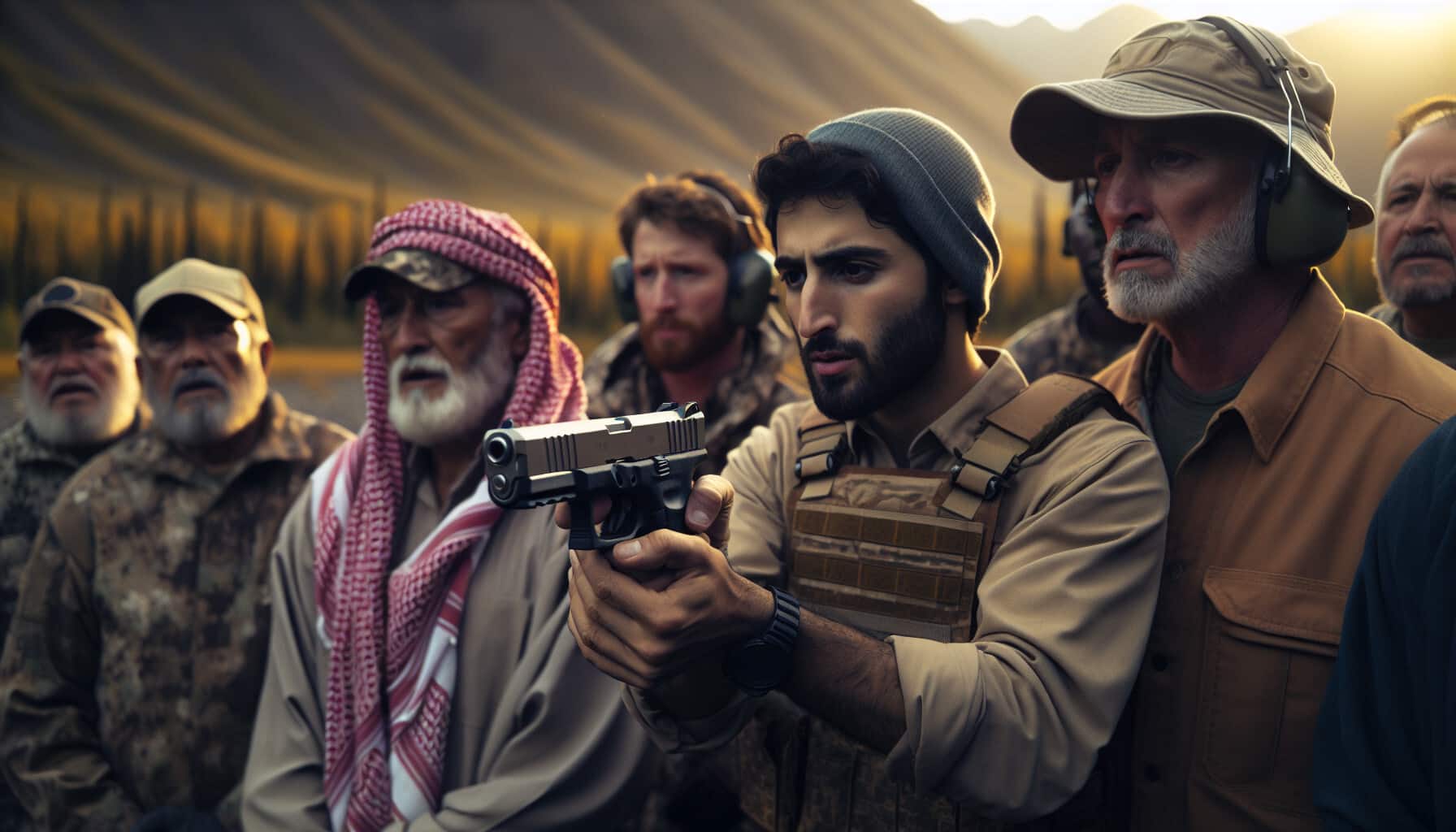
For several years, a quality handgun has been essential gear for those engaged in Alaskan hunting. With the increasing demand for self-defense handguns, it is crucial to select a reliable firearm. The 9mm caliber stands out as one of the most popular choices among hunters.
Kimber Ultra Carry II Two-Tone Semi
Auto Pistol
The chosen model, the Kimber Ultra Carry II Two-Tone handgun, is favored for its quality and performance. Kimber is recognized as a leading manufacturer in the handgun industry, making it a trusted option for both self-defense and hunting.
To enhance proficiency in using a handgun for hunting and self-defense, it is beneficial to learn fundamental skills. Consulting with a certified expert can provide valuable insights. Here are three essential skills for novice handgun users.
1. Proper Firearm Drawing Techniques
Expert Insight: “Drawing a firearm from a concealed holster must be executed consistently. The non-shooting hand should grasp the concealing garment and move to the chest while the dominant hand secures a firing grip. After clearing the holster, both hands should extend forward in a two-handed grip.”
Note: Most accidents occur during the drawing and holstering process. Mastering the fundamentals of firearm drawing is critical for safety.
2. Focusing on the Front Sight Picture
Expert Insight: “Concentrate on the front sight. Once the two-handed grip is established, align the front sight with the target. The eyes can only focus on one point at a time. The front sight indicates where the firearm is aimed.”
Note: Defensive shooting scenarios often occur at close range, yet both law enforcement and civilians have missed targets as close as 10 feet. Maintaining focus on the front sight is vital for accuracy.
What is a Sight Picture? A sight picture refers to the arrangement of the pistol sights in relation to the target while aiming. A correct sight picture combines proper sight alignment with the correct aiming point.
Tip: Refer to the NRA Shooting Fundamentals Infographic for additional guidance.
3. Trigger Press and Control
Expert Insight: “The term ‘trigger press’ is key; avoid mashing, slapping, or jerking the trigger. The goal is to press the trigger smoothly and continuously to the rear until it breaks, without disturbing your grip. Improper trigger control can lead to missed shots.”
Note: When practicing, use a target that highlights impact points, such as a Birchwood Casey Shoot-N-C Target. This type of target provides a clear visual of where shots are landing without requiring movement from the shooting position.
Mastering these three techniques serves as a solid foundation for novice shooters interested in using handguns for sport or self-defense. It is advisable to seek training from a certified instructor to ensure safe and effective shooting practices in any situation.
Tip: Always remember the responsibility that comes with firearm ownership. Adhere to the following safety rules:
- Keep your finger off the trigger until ready to fire.
- Never point the muzzle at anything you are not willing to destroy.
- Be aware of your target; do not shoot at unknown sounds or shadows.

