
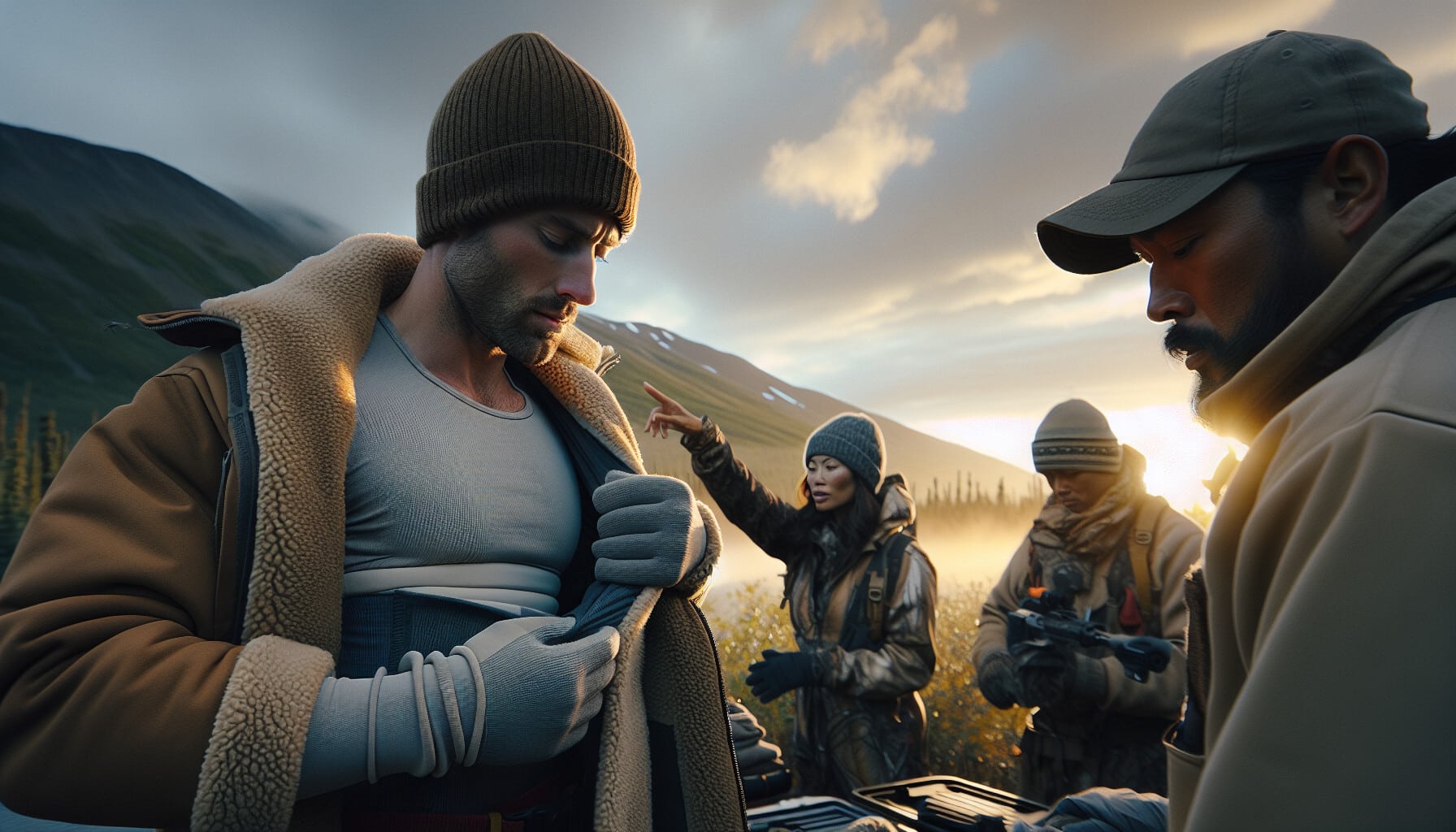


Advancements in hunting technical apparel are rapidly evolving every year. Hunters are now employing the strategies of technical layering systems that have been used by mountaineers for decades, and for good reason. Mountaineers and climbers face significant thermoregulating challenges on every trip. A pair of climbers, one belaying and one climbing, are often exposed to extreme weather conditions as they ascend an alpine rock face.
Alpine climbing presents unique challenges for thermoregulation because the climber must wear fewer layers to prevent overheating while climbing, whereas the stationary belayer often endures hours in cold, exposed conditions until it’s their turn to climb. Similar to hunting, carrying an abundance of layers while climbing is virtually impossible.
Staying warm and dry is crucial in the mountains. Getting wet in cold conditions is a cardinal sin that must be avoided. After years of mountain climbing globally, the parallels between climbing and hunting become evident. Mountain hunters must guard against moisture from both external sources (precipitation) and internal sources (sweat). While a good set of rain gear is essential to block outside moisture, managing internal moisture is more complex. Effective thermoregulation is key to preventing excessive sweating and remaining dry.
Every upper-body layer carried into the mountains should feature a hood. One of the most critical pieces of layering advice is the importance of hooded layers in mountainous environments. A hood facilitates thermoregulation without the need to frequently stop and adjust layers. With a simple flick of the wrist, the hood can be put on or removed, significantly enhancing the comfort temperature range of any upper-body garment.
Mountain Hunters are Pushing Limits Like Mountaineers
Mountain hunters face unique challenges that test their layering and thermoregulating strategies. Few mountain sports combine high aerobic output with long periods of low aerobic output (such as glassing). Additionally, hunting often occurs during the cooling fall months and inclement weather. The challenge in mountain hunting is that carrying numerous layers for warmth and dryness is impractical due to the weight of each layer.
The significance of the hood is a critical strategy derived from climbing experiences applied to mountain hunting. Imagine being on a rock face with a climbing harness, trying to add or remove layers—it’s nearly impossible. However, quickly pulling a hood on or off between climbing moves is feasible. Similarly, while hiking up a mountain on a cold morning with a pack and binocular harness, adjusting layers frequently is cumbersome, but managing a hood is straightforward. Any enhancement in garment versatility, such as hoods or venting zippers, is a considerable advantage for both climbers and hunters.
Heat Transfer Basics
The hood plays a vital role in thermoregulation due to the significant heat loss through the head. While older Army Survival Manuals claimed that 40%-45% of body heat is lost through the head, modern research suggests a lower figure. However, it is clear that the body loses more heat from areas with higher blood flow.
The warmest areas of the body are those with the most blood flow, namely the torso and head. It is crucial to bundle the torso on cold days while allowing the legs and arms to have fewer layers, as the legs can be up to 15°F colder than the core. The head, similarly, loses heat easily, which can be effectively managed with a hood or beanie.
When physical output is high, removing the hood is advisable to quickly dissipate heat. Conversely, when taking a break, slowing down, or glassing a ridge, putting the hood back on immediately helps retain heat. This concept is essential for staying warm and dry in the mountains.
Controlling internal moisture is critical for warmth. Sweat evaporation can sap heat rapidly. If sweating is not managed during the hike, the hunter will be soaked by the time they reach their destination. Once seated to glass, the sweat will draw heat away from the body as it evaporates, leading to a chilling effect.
Hood over Beanie Every Time
There are several reasons to prefer a hood over a beanie. Primarily, the hood is always attached, eliminating the risk of losing it. Many hunters have inadvertently left beanies behind in the mountains. Additionally, when removing a beanie, finding a quick-access storage option can be challenging. Stuffing it into a cargo pocket is often uncomfortable and impractical.
Moreover, a hood is more efficient at capturing body heat. Heat rises, and without a hood, warmth generated by the torso escapes through the collar of a jacket. A hood effectively captures this rising heat and insulates the neck better than a beanie. Furthermore, hoods prevent snow and debris from entering through the collar.
Top Choices for Layering
All upper-body layers taken into the mountains should feature a hood, including the core layer. A preferred layering system is offered by Sitka Gear, which provides numerous hooded options. The upper-body layering system consists of four main pieces from Sitka: Core Lightweight Hoody (base layer), Heavyweight Hoody (fleece, mid-layer), Kelvin Lite Down Jacket (insulating layer), and Dew Point Jacket (shell, outer layer).
The Sitka Core Lightweight Hoody stands out among upper-body base layers due to its unique features. It includes a built-in pullover facemask, ensuring it remains attached and accessible. The half-length chest zipper facilitates heat dumping during high-output activities, while the 100% polyester fabric offers excellent breathability and moisture-wicking properties. This versatile hoody is not only used for hunting but also for running, hiking, fishing, and as a water shirt.
Despite its lightweight nature, this layer retains body heat effectively due to the hood. Adjustments can be made easily based on exertion levels. The addition of the hood and zipper significantly extends the comfort temperature range, allowing for efficient thermoregulation without constant layer adjustments.
Sitka Gear Kelvin Lite Down Jacket
The Kelvin Lite Down Jacket is another essential insulating layer. It is favored for its unique construction, utilizing a proprietary blend of 900 fill down and synthetic fibers, ensuring loft even when wet. This design results in a reliable jacket that provides warmth even in adverse conditions.
Developed through extensive research, the Kelvin Lite Down Jacket features strategically placed insulation based on body heat mapping. It is ultra-lightweight and dependable, making it ideal for cold conditions. During late-season bow hunts in Utah and Idaho, this jacket performed exceptionally well. It is always packed in an accessible location, ready to be donned whenever a break is necessary.
Conclusion
This refined thermoregulating strategy, developed through climbing experiences, is crucial for efficiency while hunting in the mountains. Utilizing the hood on base and other layers helps maintain a stable body temperature during varied activity levels. Keeping the puffy jacket readily accessible and wearing it whenever stopping allows for fewer layers while hiking. This approach helps prevent sweating, ultimately keeping the hunter warm and dry.
Implementing these straightforward strategies significantly enhances comfort in the mountains and optimizes performance. For those seeking new upper-body layers for the upcoming hunting season, garments featuring hoods are highly recommended for extended comfort and effectiveness.