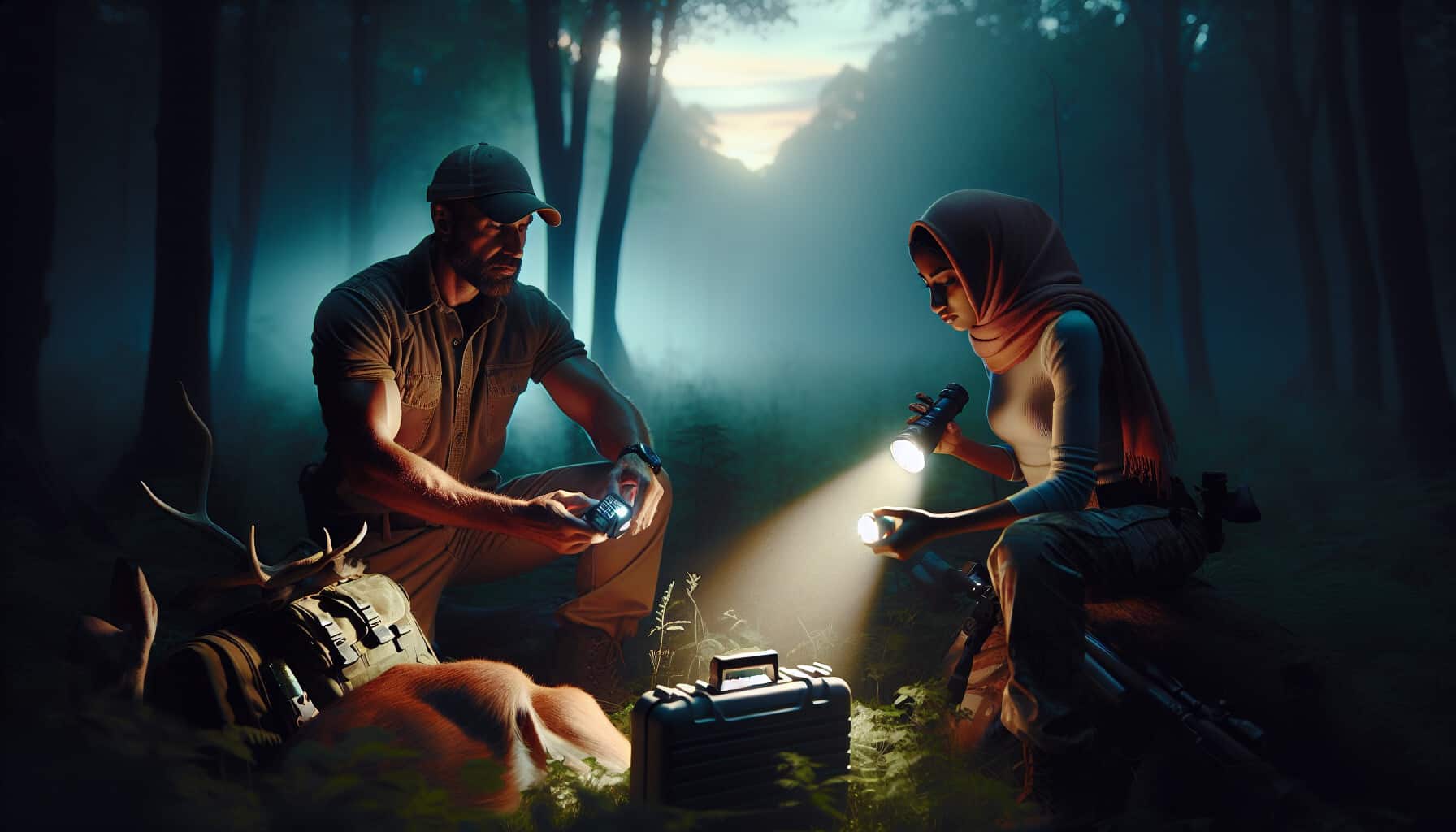
Mastering Nighttime Predator Hunting in Alaska: The Role of Effective Lighting
Hunting predators in Alaska presents unique challenges due to their nocturnal behavior and heightened wariness. One effective strategy, where permitted, is nighttime hunting, which can significantly enhance a hunter’s success rate when executed properly.
Many coyote and fox hunters rely on bright red firearm lights to spot their targets’ eyes during nighttime hunts. However, selecting a light specifically designed for scanning can yield better results. It is a common misconception that brighter lights are always superior; in reality, this is not the case. Some lights marketed as scanning lights utilize high-output LED bulbs combined with smooth reflector housings or magnifying lenses to concentrate the beam. While these may illuminate predator eyes from great distances, they can also “burn” the eyes, causing the predators to flee.
The primary goal of a scanning light is to continuously survey the area while calling. The most effective calling method involves mimicking the sounds of an injured rabbit while scanning for the reflection of approaching eyes. A low-intensity, diffused beam can achieve this at surprisingly long distances. Using a headlamp for scanning is often preferable to a handheld light, as it allows hunters to keep their hands free for their firearms.
For instance, Night Eyes Headlamps are engineered to detect a predator’s eyes from over 300 yards away, even when set at only 40% brightness. The beam design minimizes the risk of spooking predators. Its orange-peel-style reflector diffuses the light, and the adjustable brightness control enables hunters to customize the light output as needed.
Maintaining a minimal amount of diffused light on the coyote conditions it to the illumination, allowing it to approach without alarm. Once the coyote is within shooting range, the hunter can activate a brighter firearm-mounted light for positive identification and the shot.
The Night Eyes GL-350 gun-mounted light can effectively identify predators at distances of 350 yards or more. Because the coyote has been acclimated to the less intrusive scanning light, switching to a brighter shooting light does not immediately trigger its photo-phobia (aversion to light), keeping it within range longer.
Hunters often inquire whether to turn off the scanning light once the gun light is aimed at the target predator. This decision is largely subjective, but using a headlamp allows for easy deactivation after the gun light is switched on. It is crucial to ensure the gun light is activated before turning off the headlamp, as leaving the coyote in total darkness can be detrimental. The light beam serves as concealment for the hunter. Night Eyes now offers a wireless remote-control headlamp option for those who prefer not to take their hand off the rifle.
The ultimate objective is not only to see the coyote’s eyes but to bring it in close for the best shot opportunity. Overwhelming their eyes with excessive scanning light is counterproductive. A comparison could be made to hunting squirrels with a deer rifle; while it may work, there are far more effective methods. Reserve brighter lights for accurate target identification and the kill shot.
No lighting system, regardless of its design, will enhance hunting skills. Hunters must remain vigilant about effective predator hunting tactics and practice good light discipline while calling. Lights are tools, and when employed correctly, they can significantly improve success rates during nighttime hunts.