
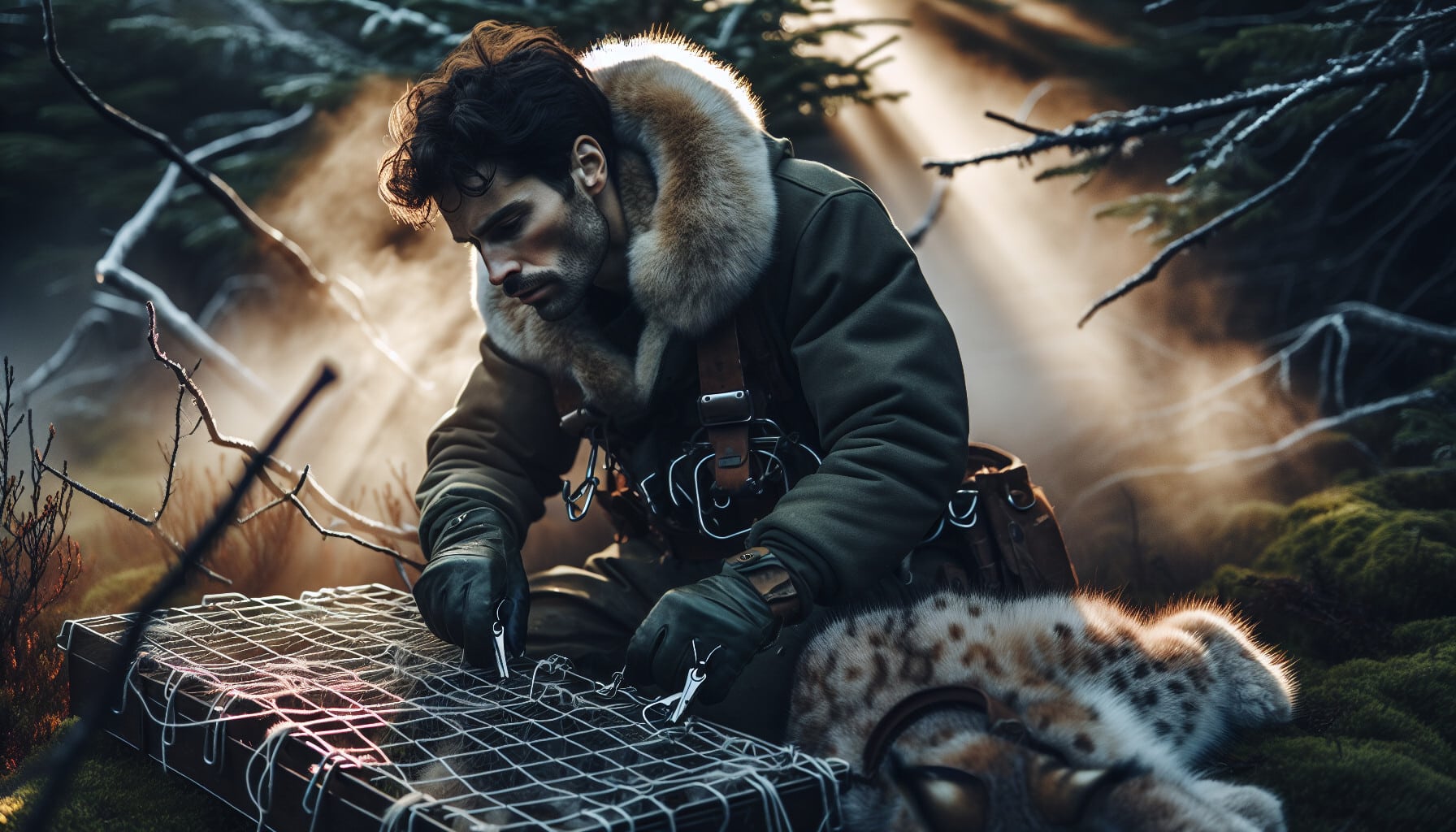


The following article outlines six essential lynx trapping techniques that any trapper can employ, regardless of location or target species.
The snowshoe trail from a week prior was lightly coated in a half-inch of fresh, powdery snow. A lone set of Canada lynx tracks, approximately the size of a baseball, followed the depressions created by the snowshoes in the deep powder. As the first set of hidden snares came into view, anticipation rose as the tracks never deviated from the trail. Upon cresting the edge of the bluff heading down to the river bottom, the huge yellow eyes of the first Canada lynx were spotted, held securely in a snare placed in a pinch point along the snowshoe trail.
The trapping areas in Southcentral Alaska are rich in fur; the primary focus has been on river otters, beavers, and coyotes, with limited success in capturing wolves. In low river bottom and swamp regions, wolverines are rare visitors, but capturing one remains a tantalizing possibility. Since starting the trapping journey seven years ago, the massive Canada lynx tracks that occasionally padded through the line have always been captivating. Until last season, they were strictly off-limits.
The game units targeted for trapping utilize a unique lynx harvest strategy not found elsewhere in Southcentral Alaska. Lynx trapping is closed for approximately seven years, then opened for three, followed by another seven-year closure. This cyclical approach is designed to leverage a well-documented phenomenon, as lynx populations rise and fall in relation to the decadal fluctuations of snowshoe hare populations. January 1, 2021, marked the first lynx trapping opener during this trapping career, making the anticipation palpable for the first opportunity to pursue these majestic cats.
Five beautiful lynx were harvested in four line checks. While the success was gratifying, it was also recognized that, as a novice cat trapper, some obvious mistakes were made, wasting time with methods that did not yield results. Reflecting on the season revealed six key takeaways that will be employed in the upcoming winter.
1. Focus on Transitions
Having trapped wolves and coyotes in the same area as the lynx trapline, it was known that locations with the highest concentrations of snowshoe hares were typically burned-over areas with regenerating vegetation. Lynx tracks were often seen intermingled with hare tracks in these regions, leading to the assumption that they would be good starting points.
While plenty of hares and some lynx tracks were found, the cats proved difficult to pattern and did not traverse the birch and poplar re-growth areas with any consistency. Likely due to the abundance of live prey, the cats seemed oblivious to scent and visual attractors, even avoiding bait piles of grouse and ptarmigan scraps.
During various trap checks, consistent lynx tracks were observed along a transition area between dense black spruce habitat, weaving in and out of the timber while remaining close to the more open burned area. As the season progressed, scouting of additional transition areas revealed similar patterns. Transitions from mature spruce to burned areas appeared most popular, but any transition between different habitat types seemed to attract the cats.
Aerial imagery analysis post-season indicated that successful locations were not in large blocks of monoculture habitat, but rather in areas with one or more transitions between diverse habitat types.
2. Don’t Be Afraid of Blocking
The 2020 season concluded with a six-week-long challenge against a pack of wolves. Although the first wolf was successfully harvested, the experience made it difficult to set traps that appeared even slightly unnatural.
During an early lynx line check, a friend joined for outdoor time during the long Alaskan winter. Frustration grew while following a single set of cat tracks that dodged, ducked, and stepped through three consecutive snares. With an hour of trapline experience, the friend suggested, “Why not place spruce boughs around the snares to guide them through?”
This solution seems obvious now, but the “wolf trapper’s mindset” made it hard to see that the tactics could be adjusted for a less wary predator. Once blocking each snare set with spruce boughs, dead logs, and brush began, misses decreased and catches increased.
Additionally, the stubborn canine trapping mindset led to missed snares where the cats stepped through the snare loop unscathed. Tightening the snares and fine-tuning the proper height resulted in lethal catches rather than misses.
3. Make It Easy for Them
Previous years on the line indicated that lynx prefer to follow snowshoe and snowmachine trails through deep snow. Snares or traps set in these trails would likely be effective. This tactic was heavily utilized during the first lynx season, but additional field observations led to new insights.
Setting traps in personal trails can work anywhere, but it is particularly effective in deep snow. In one area, a section of timber bordering a large swamp had wind-driven drifts almost waist-deep. Initially perceived as marginal habitat, it was later noted that every lynx traveling through that section used the snowshoe trail without fail.
For the upcoming season, areas in the GPS where topography and vegetation create deep snow drifts will be targeted for trail sets. Even in marginal habitats, deep snow can create a tunnel that no traveling cat can resist.
4. Funnels
One area on the trapline features a narrow band of black spruce that bisects two open swamps. This band also traverses a small spur, acting as a ramp for animals to ascend from the river bottom to a higher bench. Wolves occasionally use this spur, and moose and caribou also traverse the gentle grade. Observations during wolf snares revealed that cats passed through this area, leading to the placement of half a dozen blind snares once lynx trapping opened in 2021. These snares accounted for three of five successful catches.
The location’s attraction for lynx was twofold. The gentle grade of the spur was utilized by lynx as it was by moose and wolves, while the reluctance of lynx to cross open swamps likely stems from vulnerability to predation by coyotes and wolves. The thin strip of timber lining the spur served as a safe travel route from one timber section to another.
Post-season scouting of other timber funnels revealed similar findings, with consistent cat sign found in most funnels, where lynx travel to avoid open areas.
5. Don’t Overlook Intersections
The trapline is traversed by a central trail heavily used by dog mushers. To avoid interference, sets are kept a good distance from this trail, but many less-utilized offshoot trails exist. Preseason scouting indicated that where an offshoot trail met the main trail, lynx tracks and droppings were consistently present. One such intersection was frequented by a female with two kittens and two large, lone lynx.
A large cubby was placed at one intersection, featuring a concealed duck carcass, gland lure, and hanging CD. On the first check, a large lynx approached the cubby but did not commit. Disappointed, two satellite snares were added in nearby pinch points.
During the second check, fresh lynx tracks led straight to the cubby. The cat circled the set for a better view and was ultimately snared by a satellite snare positioned behind the cubby. This lynx became the largest of the season, measuring over 40 inches from nose to tail.
6. Attractors Really Do Work
Insights from experienced lynx trappers and articles on bobcat trapping in the Lower 48 suggest that hanging visual attractors near sets can effectively lure in cats. However, skepticism about the effectiveness of shiny objects persisted.
One night, mechanical issues forced a nighttime run of the trapline. Illuminated by the aurora borealis, fresh lynx tracks were spotted along the trail. A lynx cubby set about 20 yards off the trail featured a CD on a string and two satellite snares in nearby pinch points. The tracks indicated the cat made a 90-degree turn to investigate the hanging CD and was promptly snared.
In multiple locations, fresh tracks indicated that traveling lynx rarely ignored visual attractors. Most cats deviated briefly to examine the CD, reflective tape, or tinsel hung nearby. While this was the only cat caught directly under a visual attractor, they proved effective in coaxing lynx into snare areas.
Conclusions
All lessons outlined above will be applied in the upcoming lynx season, along with key takeaways applicable to all trappers, regardless of target species or region.
Even for those successful with other species, it is crucial to remain flexible when pursuing a new species. Techniques that may have seemed laughable for wolves or coyotes can be extremely effective for lynx. Sticking rigidly to past lessons can lead to missing what the animals are currently demonstrating.
Having a fresh perspective on the trapline can provide valuable insights. A friend who accompanied on the line had no ingrained bad habits and quickly suggested creating a wall of blocking to guide cats into snares. This adjustment likely doubled the catch rate.
With these lessons learned and a rising lynx population, expectations are high for another successful season, with full stretchers and a substantial fur check next spring.