
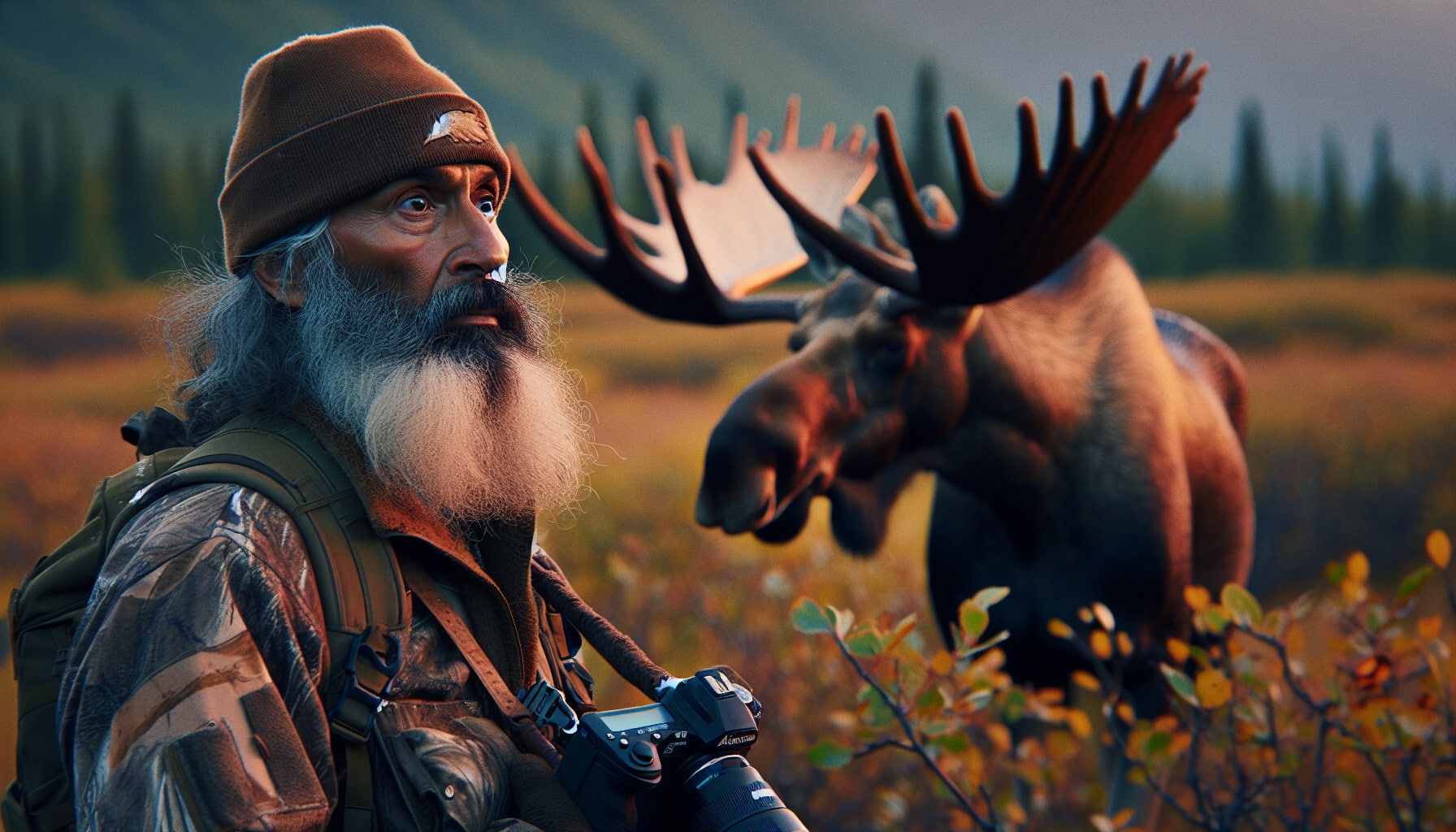


Moose are the largest members of the deer family, and a large bull is one of the most impressive trophies in the hunting world. Field judging moose can be challenging, especially when quick decisions are necessary. For hunters aiming to record a bull moose, understanding how to evaluate them is crucial.
Understanding Moose Antler Scoring Criteria
Many hunters often focus solely on antler spread when judging moose. However, both the Boone and Crockett Club and Safari Club International consider multiple factors in their scoring systems, including:
- Length and height of each palm
- Width of each palm
- Points on each antler
- Circumference at the base of each antler
While the spread is a desirable characteristic, it contributes only once to the overall score. The most significant scoring factors are palm length and width. Look for antlers that are high, broad, and well-developed. Here are some practical tips for field judging when a tape measure is unavailable.
Key Indicators for Field Judging Moose Antlers
When viewed from the side, a bull moose’s top palms should ideally reach back to the hump on its back, and the tips of the brow points should extend at least halfway down the bridge of its nose. Additionally, palmation between the front points is essential, as this can add up to 10 inches in length per side.
Measuring Outside Spread
Outside spread is also a critical measurement, with a minimum of 50 inches being the target for record book animals, and 60 inches considered exceptional. The best chance for accurate evaluation occurs when the moose’s head is down and antlers are nearly vertical. In this position, aim for at least 10 inches of open space between the bull’s body and the inner edges of its palms.
If only the bull’s head is visible, use its ears as a reference. A mature bull’s ears measure approximately 30 inches from tip to tip, with each ear being 9 to 10 inches long. If the bull appears to have additional ear-length antler spread on either side, it likely has a 50-inch spread. Remember that the outside spread is measured to the tips of the widest points on the outside edges of the palms, perpendicular to the inner edge of the palm. An exceptionally long point on each edge can significantly contribute to this measurement.
Estimating Palm Width
This ear gauge also aids in estimating palm width. If a bull’s palms are at least as wide as its ears are long, it will have palms measuring at least 10 inches wide, which is the minimum for a record book bull.
Challenges in Judging Moose Antlers
While these estimation methods are useful, be cautious; the body size of bulls can vary, making antler judgments misleading. A large-bodied bull may appear to have weak antlers, while a smaller-bodied bull may seem to have impressive antlers.
Ultimately, no single attribute makes a moose rack exceptional, and very few bulls possess all desirable qualities. However, if a bull exhibits several of these characteristics, it could be a contender for the record books.
Good hunting.