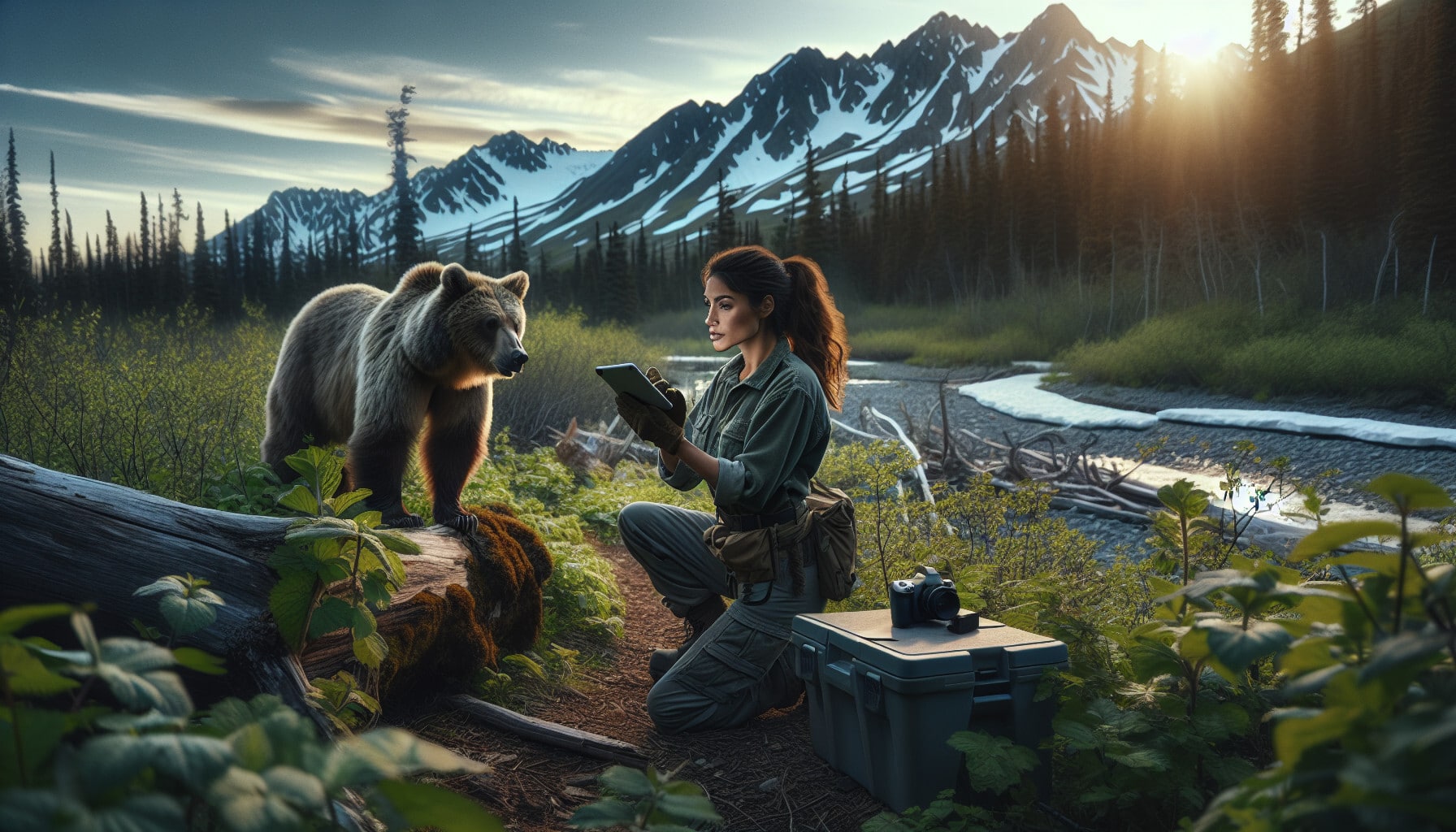
During bear season, hunters often find themselves navigating challenging terrains, such as the steep slopes of northwest Montana’s Cabinet Mountains. After a strenuous 1,000-foot vertical climb, the first action is to grab optics for a clear view of the landscape, scanning for foraging spring bears in the canyon side hills and benches.
Upon spotting a thickly-furred cinnamon-colored bruin in a grassy meadow 1,000 feet below, the excitement builds. However, the thrill can quickly turn to disappointment if the bear vanishes into the dense woods after a long trek down.
TIP: 11 Essential Items for Black Bear Hunts
While many bears in spring are hunted over bait, those seeking a more active approach will find ample opportunities in the western U.S. and Canada, with prime hunting occurring from April through June. Top destinations include the Rocky Mountain States, Alaska, British Columbia, and Alberta.
A black bear does not have to be hunted over bait.
Areas with mountains and open country are ideal for employing the spot and stalk technique, allowing hunters to see long distances.
Where to Locate Spring Bears
Potential hotspots for spotting spring bears include:
- Hillsides and bluffs
- Benches and avalanche slides
- Meadows within forests
- Logging trails and clear-cuts
- Mossy openings
The earliest bears often emerge on north-facing slopes near their dens, cautiously feeding as snow begins to melt and the first grasses appear. Once they abandon their dens, typically in April or early May, they move to lower elevations just below the snow line, following the receding snow as spring progresses. South and southwest-facing mountainsides are particularly productive, receiving more sunlight and greening up faster.
What Do Spring Bears Eat?
In mountainous regions, spring bears feast on:
- Ants and grubs
- Fiddleheads and sedges
- Roots and leaves of flowers like trillium and glacier lily
- Tender green grass
- Occasional winter-killed deer, elk, or beaver
Identifying these food sources will significantly increase chances of locating bears.
Glassing for Bears
To effectively glass for bears, find elevated points on knolls or ridges that offer a broad view of potential bear habitats. Using binoculars with 10x and 15x magnification is recommended—10x for scanning and 15x for detailed observation. Employ slow, horizontal sweeps of the binoculars, and periodically rest your eyes to avoid fatigue. This method ensures that no bears are overlooked.
Optimal Timing for the Hunt
Starting the hunt at dawn is common, but spring days can be long. Most bears tend to be more active later in the morning, around 9 a.m. Therefore, it may be more effective to rest and plan to hunt into the evening when bear activity peaks. Upon spotting a mature bear, assess the situation carefully to determine if a stalk is feasible. If the bear is too far away or visibility is poor, consider marking its location for a follow-up the next day.
Strategizing Your Approach
When planning to approach a spotted bear, consider stalking to a point on an opposite hillside for a clearer shot. This method enhances visibility and allows for better follow-up shots. Always use a stable rest when possible, aiming for the heart-lung area or the rear of the front shoulder before smoothly squeezing the trigger. Regardless of the bear’s coat color—chocolate, blonde, cinnamon, or glossy black—the moment of success after a challenging hunt is unparalleled.
For one hunter, this moment arrived after three rigorous days in the Kootenai National Forest of western Montana. After observing nine different bears, the thrill of cleanly harvesting the first bear seen was a testament to the rewards of perseverance.
TIP: Be aware of local regulations and guidelines regarding bear hunting techniques and baiting.