In the realm of hunting, few experiences rival the excitement of pursuing big game. While the renowned “Big Five” of Africa—elephants, buffalo, leopards, lions, and rhinoceroses—are not found in the U.S., North America boasts its own formidable big game species that can pose significant risks to hunters.
From the imposing presence of grizzly bears to the massive bison, each of these creatures presents unique challenges and dangers, even for the most seasoned hunters. This guide explores five of the most dangerous big game animals in Alaska.
Bison: The Unexpected Threat
Speed: Bison are surprisingly agile, reaching speeds of up to 30 mph.
Size: They can weigh as much as 2,000 pounds.
Threat: Between 1980 and 1999, bison injured more people than bears in Yellowstone National Park, charging a total of 79 individuals. Notably, a bison fatality occurred in 1983.
Grizzly Bears: The Apex Predator
Speed: Grizzly bears can sprint at speeds of 30 mph.
Size: Male Kodiak bears can weigh up to 2,000 pounds and stand 13 feet tall.
Threat: Annually, grizzly bears are responsible for one human fatality in approximately 35,000 encounters. From 1980 to 1999, only 24 injuries were reported in Yellowstone.
Black Bears: The Stealthy Hunter
Speed: Black bears can reach speeds of up to 35 mph.
Size: They typically weigh between 600 and 800 pounds and can stand 6 feet tall.
Threat: Each year, black bears are involved in one fatality for every 100,000 humans.
Cougars: The Elusive Feline
Speed: Cougars can sprint up to 45 mph and leap as high as two stories.
Size: They can weigh around 150 pounds and measure up to six feet in length.
Threat: Cougar attacks occur approximately four times a year, with one resulting in a fatality.
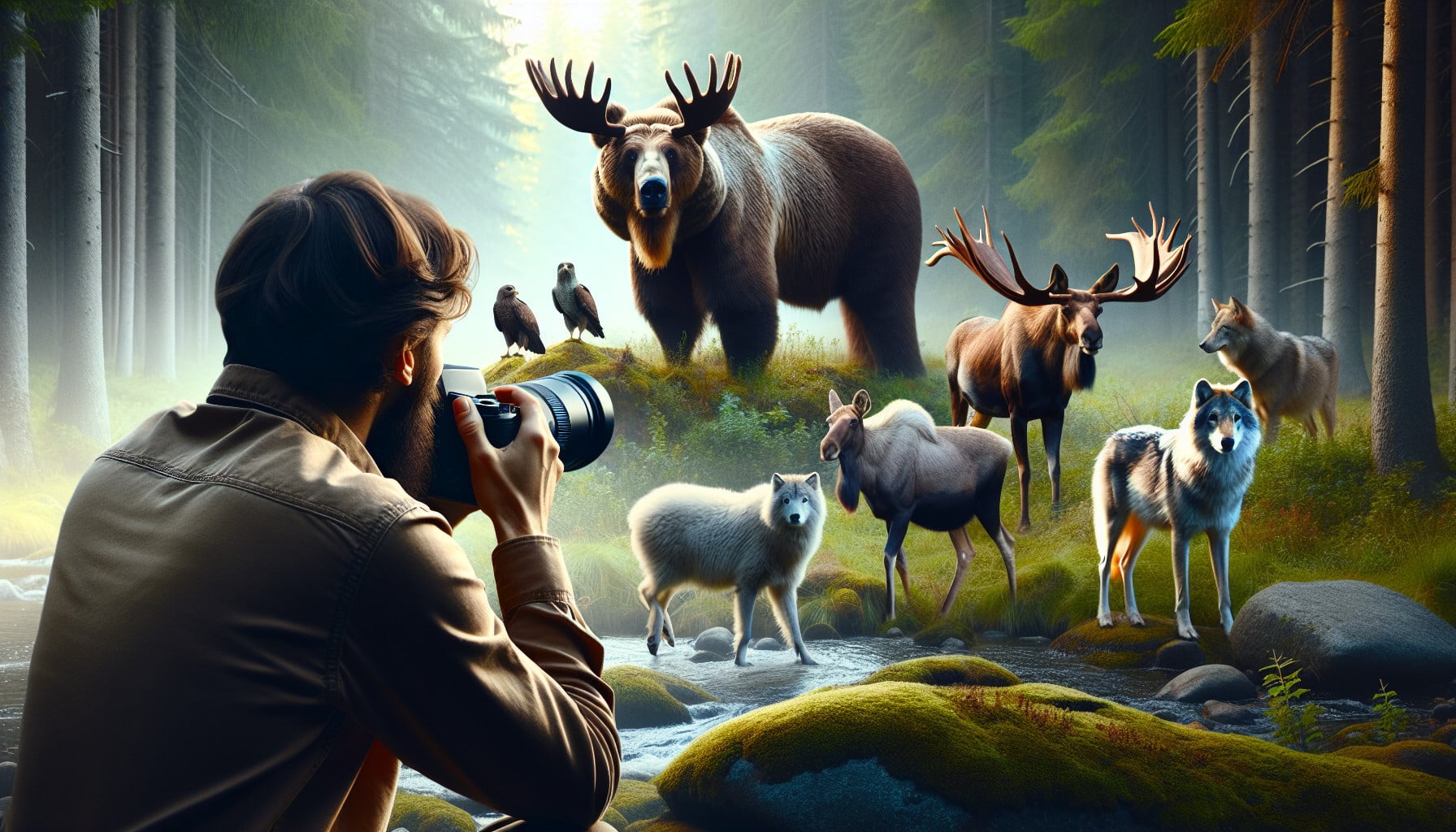
Moose: The Giant of the Forest
Speed: Moose can run as fast as 40 mph.
Size: They can weigh up to 1,000 pounds and stand 6.5 feet tall at the shoulder.
Threat: In Yellowstone, only one moose attack was documented between 1980 and 1999.